


How Hospitals Benefit from Locum Doctors
18 Jun 2026
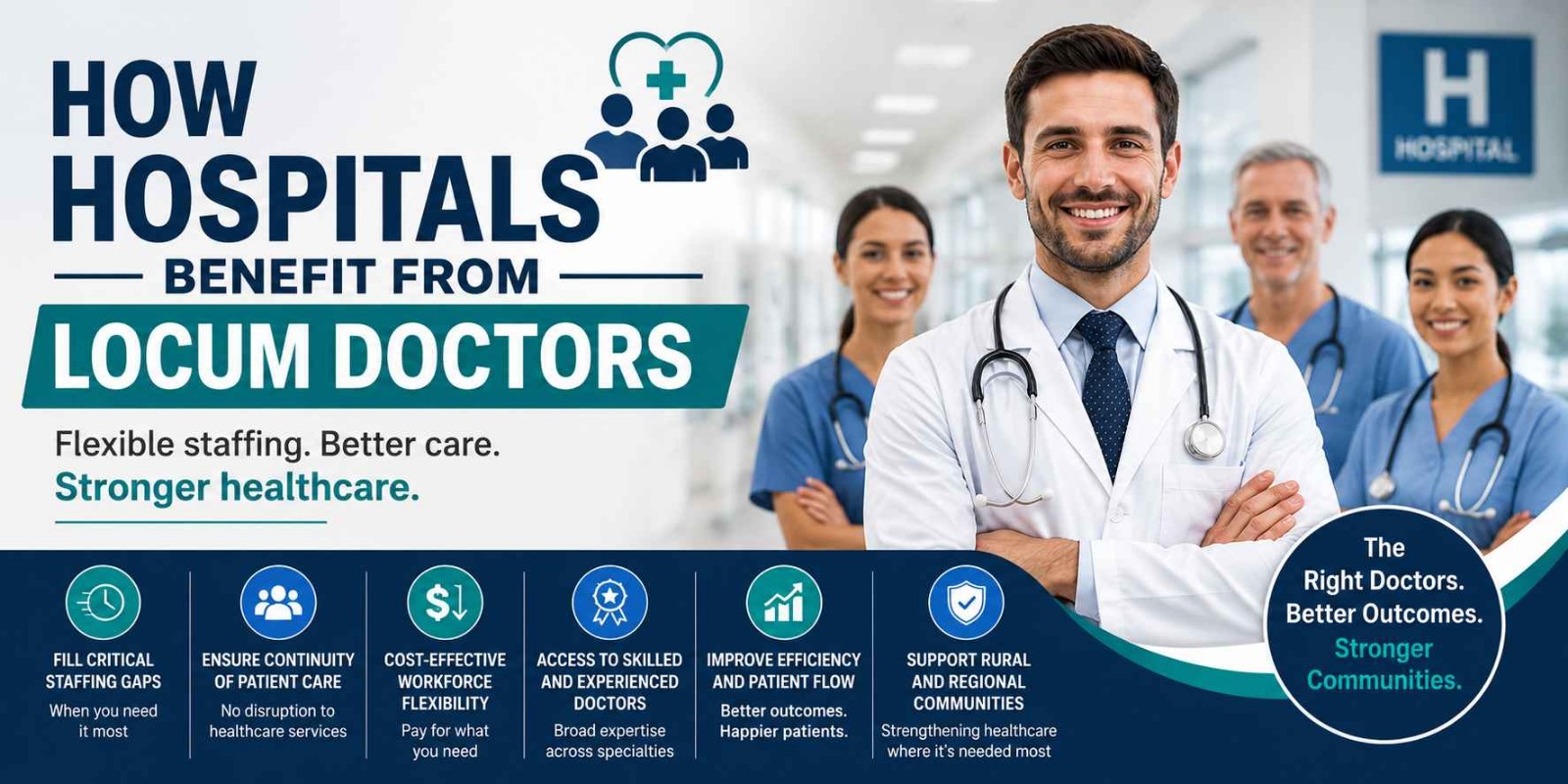
Hospitals across Australia are increasingly relying on locum doctors to maintain safe, efficient, and uninterrupted patient care. With ongoing staffing shortages, rising patient demand, and workforce burnout, locum doctors have become an essential part of the modern healthcare system.
From major city hospitals in Sydney to regional health services across New South Wales, locum doctors help fill critical gaps and ensure hospitals continue operating smoothly without compromising care quality.
1. Filling Critical Staffing Shortages
One of the biggest benefits locum doctors provide is immediate workforce support when permanent staff are unavailable.
Hospitals often face gaps due to:
Staff leave (annual, maternity, sick leave)
Unexpected resignations
High patient demand periods
Recruitment delays in rural areas
Locum doctors step in quickly, ensuring there is no disruption in emergency departments, wards, or outpatient services. This is especially important in busy healthcare systems across Australia where demand frequently exceeds supply.
2. Maintaining Continuity of Patient Care
Continuity of care is essential for patient safety and hospital performance. When staffing gaps occur, services can slow down or become overwhelmed.
Locum doctors help hospitals:
Keep departments fully operational
Reduce patient waiting times
Prevent service cancellations
Maintain emergency response capacity
In high-pressure hospitals in Sydney, locum doctors ensure that patient care remains consistent even during peak demand periods.
3. Reducing Pressure on Permanent Staff
Burnout is a serious issue in the healthcare sector. Permanent hospital staff often work long hours under intense pressure, which can affect performance and morale.
Locum doctors help by:
Sharing patient load during busy shifts
Covering overtime and weekend work
Allowing permanent staff to take leave
Reducing overall workload stress
This support improves job satisfaction and retention among full-time hospital staff, particularly in busy regions across New South Wales.
4. Cost-Effective Workforce Flexibility
Hiring permanent staff for every short-term need is expensive and inefficient. Locum doctors provide a flexible staffing solution that helps hospitals manage budgets more effectively.
Benefits include:
Paying only for required shifts
Avoiding long-term employment costs
Reducing recruitment and onboarding expenses
Scaling workforce up or down as needed
This flexibility is especially valuable for public health systems managing fluctuating demand.
5. Access to Skilled Specialists
Locum doctors often include highly experienced specialists who can step into complex roles with minimal onboarding time.
Hospitals benefit from:
Immediate access to senior-level expertise
Coverage for specialised departments
Support in critical care and emergency units
Temporary leadership during staff transitions
This ensures that even highly specialised services remain operational without delay.
6. Supporting Rural and Regional Healthcare Services
Many regional hospitals across New South Wales struggle to attract and retain permanent doctors. Locum doctors play a crucial role in bridging this gap.
They help by:
Providing short-term coverage in remote areas
Ensuring essential services remain available
Supporting rural emergency departments
Bringing diverse clinical experience to local teams
Without locum doctors, many rural hospitals would struggle to maintain consistent service levels.
7. Improving Patient Flow and Service Efficiency
When hospitals are understaffed, patient flow slows down, leading to longer waiting times and overcrowded emergency departments.
Locum doctors help improve efficiency by:
Reducing patient backlog
Speeding up consultations and admissions
Supporting faster discharge processes
Improving overall departmental workflow
In high-demand hospitals in Sydney, this directly improves patient satisfaction and system performance.
8. Flexibility During Peak Demand Periods
Hospitals often experience seasonal surges in patient numbers due to flu seasons, public health emergencies, or unexpected events.
Locum doctors provide:
Rapid response staffing solutions
Flexible workforce scaling
Short-term coverage during crises
Support during holiday staffing shortages
This flexibility ensures hospitals remain prepared for unpredictable demand spikes across Australia.
9. Reducing Recruitment Pressure
Recruiting permanent doctors is a long and resource-intensive process. Locum doctors help hospitals bridge gaps while recruitment continues in the background.
They allow hospitals to:
Maintain services during hiring delays
Test department needs before permanent hiring
Avoid rushed recruitment decisions
Maintain stability in staffing levels
This is especially useful for hard-to-fill roles in rural or specialised departments.
10. Enhancing Overall Healthcare System Resilience
Locum doctors play a vital role in strengthening the entire healthcare system by adding flexibility and responsiveness.
Their contribution ensures:
Hospitals can adapt quickly to change
Patient care remains uninterrupted
Staff burnout is reduced
Service delivery remains stable across regions
In both metropolitan hubs like Sydney and rural communities across New South Wales, locum doctors help create a more resilient and reliable healthcare system.
Final Thoughts
For healthcare facilities looking to access qualified medical professionals quickly, partnering with a trusted locum agency in Australia can streamline recruitment, reduce staffing gaps, and ensure continuity of patient care. Locum doctors are no longer just temporary replacements, they are a strategic asset for modern hospitals. By providing flexibility, specialist expertise, and immediate workforce support, they help hospitals maintain high-quality care while managing staffing challenges.
Across Australia, especially in busy health networks in Sydney and regional facilities in New South Wales, locum doctors play a critical role in keeping healthcare systems running efficiently and safely.
As demand for healthcare continues to grow, the importance of locum doctors will only increase, making them an essential part of the future of hospital staffing.