


What Happens When You Get a Locum Doctor Job Through a Recruitment Agency?
22 Oct 2026
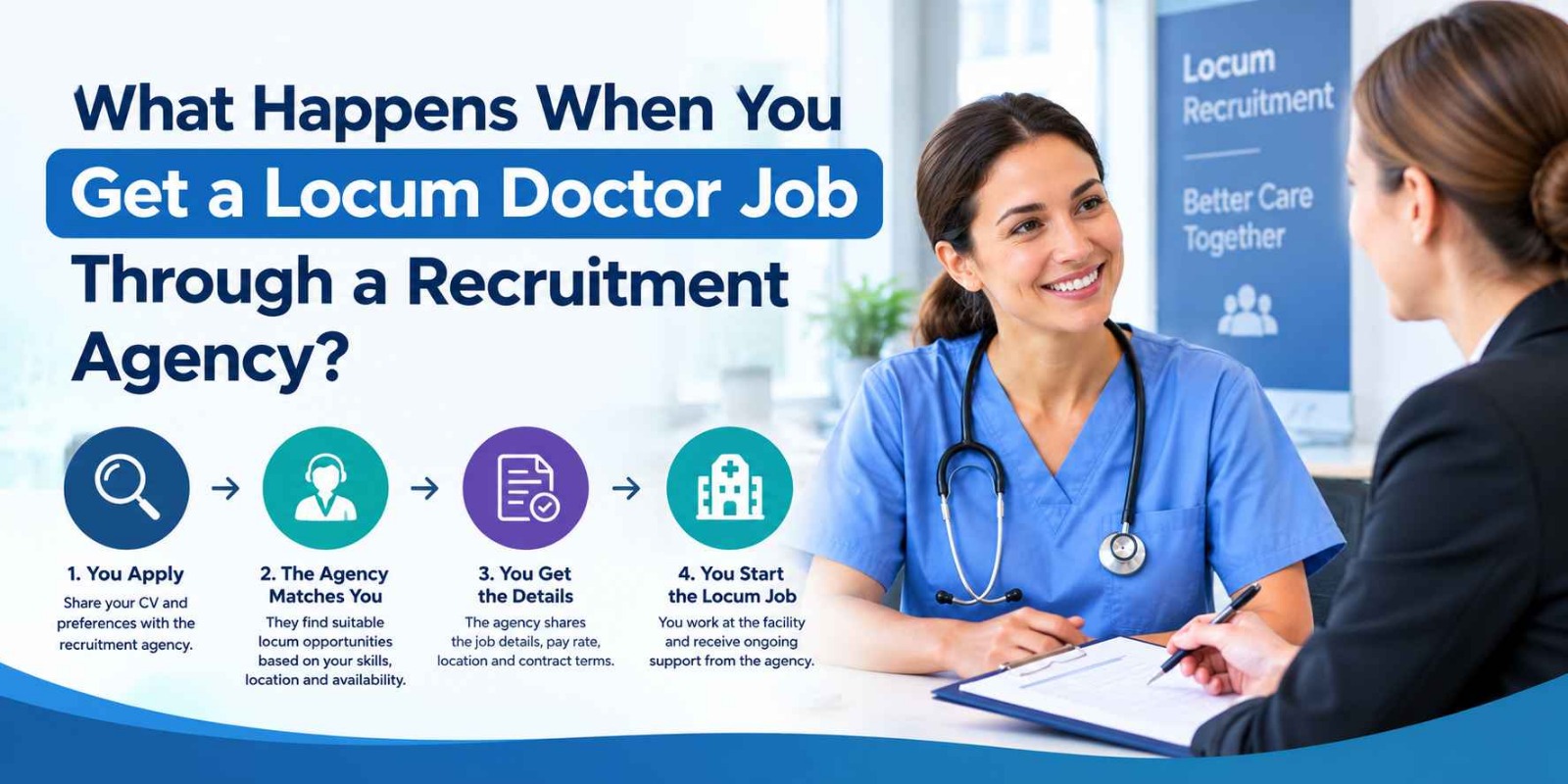
Working as a locum doctor in Australia can be an excellent way to gain professional experience, explore different healthcare facilities, and enjoy greater flexibility in your career. However, finding suitable locum positions, managing paperwork, and understanding employment arrangements can be challenging, particularly if you are new to locum work.
This is where a locum doctor recruitment agency can help. These agencies connect doctors with hospitals, medical centres, and healthcare facilities that need temporary medical staff. They can also assist with job matching, credential checks, placement arrangements, and ongoing support.
But what actually happens after you secure a locum doctor job through a recruitment agency? Here is a step-by-step guide to help you understand the process.
1. Register with a Locum Doctor Recruitment Agency
The first step is registering with a recruitment agency that specialises in locum medical placements. You will typically provide your CV, professional qualifications, registration details, clinical experience, and preferred work locations.
The agency may also ask about your availability, preferred specialties, expected pay rates, and willingness to work in regional or rural areas.
For example, some doctors prefer short-term hospital placements, while others are interested in general practice roles or longer assignments in regional Australia.
Providing accurate information helps the recruitment consultant understand your requirements and identify suitable opportunities.
2. Discuss Your Career Goals and Job Preferences
After registration, a recruitment consultant will usually contact you to discuss your experience and career objectives.
This conversation helps the agency determine which positions match your skills, qualifications, and availability.
You may discuss factors such as:
Preferred locations, including metropolitan, regional, and rural areas.
Available dates and preferred shift patterns.
Clinical specialties and levels of responsibility.
Hourly, daily, or sessional remuneration expectations.
Accommodation, travel, and other placement requirements.
A good recruitment consultant will consider these preferences when recommending jobs rather than simply offering any available position.
This can be particularly helpful for doctors who want to balance professional development with personal commitments.
3. Receive Suitable Locum Job Opportunities
Once the agency understands your preferences, the recruitment consultant will search for suitable locum assignments.
Healthcare facilities often require temporary doctors to cover staff leave, manage increased patient demand, fill vacancies, or maintain essential medical services.
The agency may present opportunities that include details about the facility, job responsibilities, location, duration, expected working hours, and remuneration.
For instance, a doctor looking for a two-week placement may receive an offer to cover shifts at a regional hospital. Another doctor might find a longer-term opportunity at a general practice.
Before proceeding, carefully review the position details and ask questions about the clinical environment, on-call requirements, supervision, and expected workload.
You should also clarify whether travel, accommodation, and other expenses are covered.
4. Complete Credentialing and Compliance Checks
Before you can begin working, the healthcare facility and recruitment agency will need to verify that you meet the relevant requirements.
The exact process depends on the role, state or territory, facility, and your employment arrangement.
Common requirements may include:
Current registration with the Medical Board of Australia through Ahpra.
Evidence of medical qualifications and relevant experience.
Professional references and employment history.
Professional indemnity insurance arrangements.
Identification and work rights documentation.
Immunisation records and other health screening requirements.
Working With Children Checks or police checks, where applicable.
Some hospital positions may also require additional training certificates, specialist qualifications, or evidence of recent clinical experience.
Completing these checks early can help prevent delays when a suitable job becomes available.
5. Confirm the Job Offer and Employment Terms
Once the healthcare facility selects you, the agency will help coordinate the placement and confirm the next steps.
Before accepting, make sure you understand the agreed remuneration, roster, start and finish dates, cancellation arrangements, and any additional responsibilities.
It is also important to establish who will employ you and pay you. Depending on the arrangement, you may be employed by the recruitment agency, engaged through another contractual structure, or contracted directly to the healthcare provider.
These differences can affect invoicing, tax obligations, superannuation, insurance, and other employment entitlements.
Ask for the relevant agreement in writing and clarify any conditions you do not understand before committing to the placement.
6. Organise Travel, Accommodation, and Onboarding
For placements outside your local area, travel and accommodation may be important considerations.
Some agencies help arrange accommodation and transport, while others provide allowances or expect doctors to organise their own arrangements.
Confirm the details before travelling, including who pays the expenses, whether reimbursement conditions apply, and what happens if the placement changes.
The healthcare facility may also arrange an orientation or onboarding session before your first shift.
This can cover workplace policies, clinical systems, emergency procedures, reporting requirements, and introductions to the medical team.
Being familiar with the facility's processes helps you settle into the role and provide safe, effective patient care.
7. Start Your Locum Assignment
Once credentialing, onboarding, and contractual arrangements are complete, you can begin your assignment.
As a locum doctor, you are expected to work within your qualifications, registration conditions, and scope of practice while following the facility's clinical policies.
You will generally be responsible for patient assessments, treatment decisions, documentation, communication with other healthcare professionals, and any other duties outlined in your role.
Although you are working temporarily, professionalism and clear communication remain essential.
If you encounter difficulties with your roster, workplace arrangements, or responsibilities, contact the appropriate supervisor or recruitment consultant promptly.
8. Manage Timesheets, Payments, and Ongoing Support
After starting work, you may need to submit approved timesheets, invoices, or other records to receive payment. The process depends on your employment or contracting arrangement.
Confirm payment frequency, applicable overtime rates, superannuation arrangements, and any deductions or reimbursements before beginning the assignment.
A recruitment agency may also check in during your placement to ensure everything is progressing smoothly.
If the assignment is going well, the consultant may discuss extending your contract or arranging future opportunities.
Once your placement finishes, you can provide feedback, update your availability, and explore other locum positions that suit your career plans.
Benefits of Getting a Locum Job Through a Recruitment Agency
Working with a recruitment agency can simplify several aspects of finding and managing locum work.
Access to more opportunities: Agencies maintain relationships with healthcare providers and may know about vacancies that are not widely advertised.
Time savings: Recruitment consultants can help coordinate applications, credentialing, interviews, and placement logistics.
Flexible career options: You can explore different facilities, locations, and assignment lengths based on your availability.
Placement support: Depending on the agency, you may receive assistance with accommodation, travel, onboarding, and workplace concerns.
Career development: Working across different healthcare settings can broaden your clinical experience and professional network.
However, services vary between agencies, so it is worth comparing their support, communication, contract terms, and fee arrangements.
Final Thoughts
Getting a locum doctor job through a recruitment agency involves more than simply accepting a vacancy. The process usually includes registration, consultation, job matching, credentialing, contract confirmation, onboarding, and ongoing placement support.
Choosing an experienced locum doctor recruitment agency can make this process more organised and help you find opportunities aligned with your professional goals.
Before accepting any assignment, review the employment terms carefully, confirm your registration and insurance requirements, and make sure the role matches your clinical experience.
With the right preparation and support, locum work can offer Australian doctors a flexible way to build experience, explore new healthcare environments, and develop their careers.